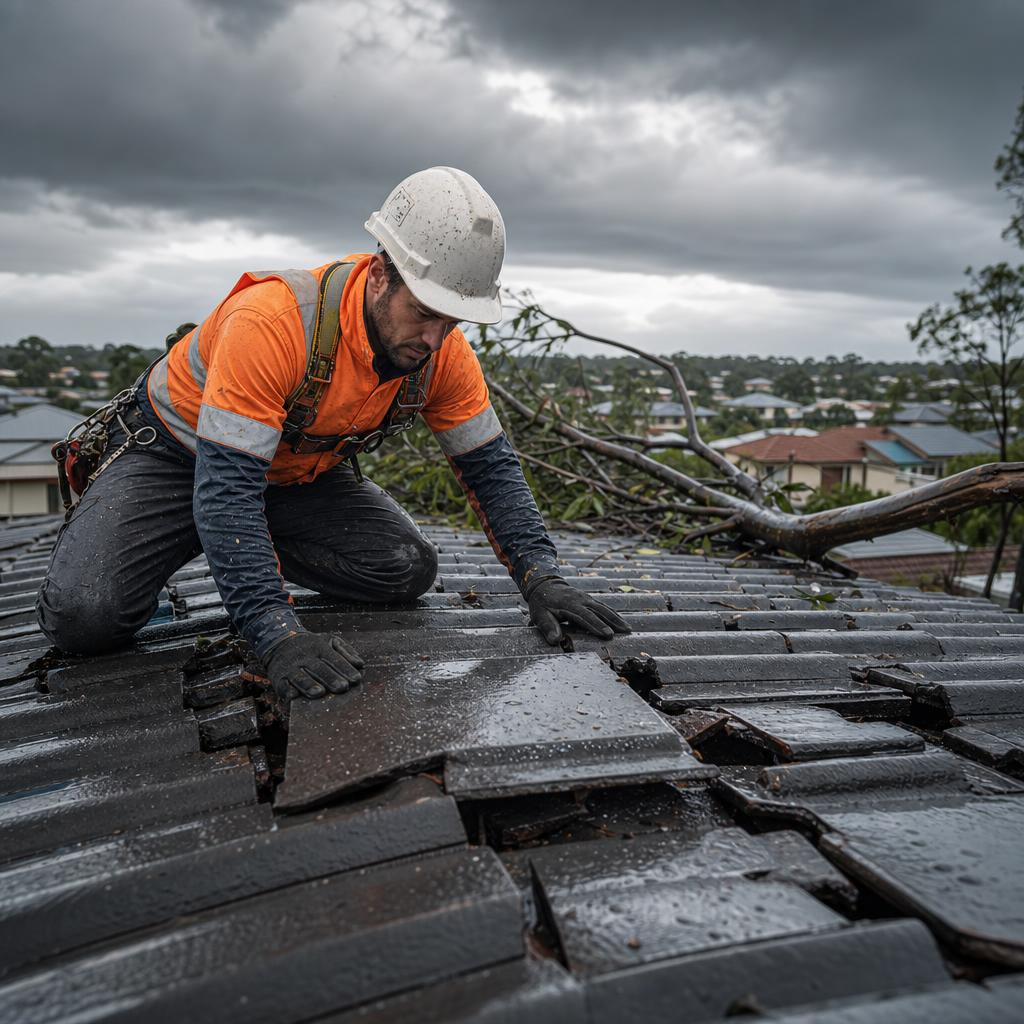
Once emergency roofing work has stopped immediate water entry, it is easy to assume the job is finished. Make-safe and permanent repair are separate stages. The handover should make that distinction clear, with a record of temporary measures, remaining hazards and the next action. This is particularly important if a different contractor will complete the repair.
Safety comes before records
Stay away from loose roof material, sagging ceilings and water near electrical fittings. Do not enter the roof cavity or climb up to inspect temporary coverings. Call 000 for immediate danger to life. Electrical hazards need a licensed electrician or the relevant emergency service; a roofing visit is not electrical clearance.
Take photographs only from a safe location. The crew should document areas that require professional access. You do not need to put yourself underneath a damaged ceiling or beside fallen wires to obtain evidence for an insurer.
An emergency roof make-safe aims to reduce immediate danger and further loss while a lasting repair is assessed and organised.
The temporary-work record
- Date of attendance and the affected roof areas.
- Photographs of observed damage and the temporary measures installed.
- A plain-English description of what was secured, covered or left inaccessible.
- Known limitations, remaining hazards and any restricted areas.
- A contact and instructions if water returns or the covering shifts.
Ask the crew to separate observed damage from assumptions about its cause. Temporary work can obscure an original defect, so before-and-after photographs help the later inspector understand what changed. Keep invoices and any report together rather than relying on messages held by several people.
Agree a review trigger, not an assumed lifespan
A temporary cover is exposed to weather and is not a maintenance-free roof. Ask whether a review is needed, what changes should prompt an urgent call and who is responsible for arranging it. Do not assume a tarp will remain suitable for a fixed number of weeks regardless of wind, rain or the original damage.
If the permanent repair is delayed, tell the contractor rather than leaving the temporary protection unreviewed. Observe only from safe areas and do not tighten fixings, reposition coverings or add weights yourself.
Transfer the findings into a permanent scope
The next inspection should identify the cause, the damaged components and any concealed areas that still need investigation. The repair scope should explain how temporary materials will be removed, any attachment points made good and the roof restored to its intended drainage arrangement. Internal drying and reinstatement may be separate work.
For an insurance claim, contact your insurer promptly about its process and retain the records it requests. Coverage, approvals and reimbursement depend on your policy and circumstances. Emergency protection does not automatically authorise a full replacement, and this guide is not insurance advice.
Close the gap between contractors
If another roofer takes over, share the complete make-safe record and agree who controls temporary protection during the transition. Confirm the permanent appointment and any interim inspection rather than assuming one team has contacted the other. At completion, keep the final scope and photographs alongside the emergency record so the sequence remains clear.
Make the next step explicit
Ask for temporary-work records and a clear follow-up plan, especially where insurance or another repair contractor is involved.
Discuss emergency roof make-safe support