Roof Leak Repairs
Wind Driven Rain Roof Leak Repairs Across Sydney
When rain arrives sideways, water goes uphill -- and finds gaps that gravity never would.
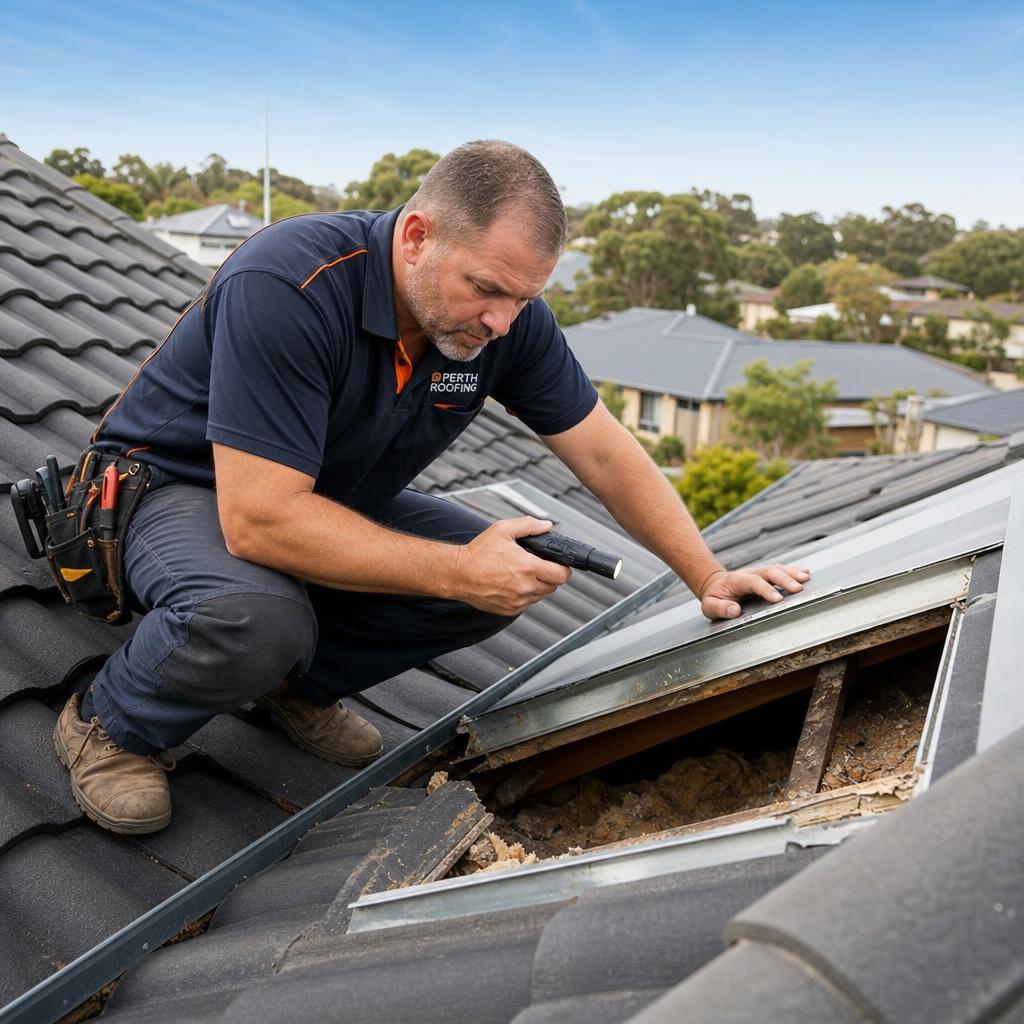
Wind-driven rain behaves nothing like a vertical downpour. When a Sydney southerly drives rain horizontally, water is pushed up under laps, sideways behind flashings and through gaps on the windward face that never leak in still conditions. These leaks are directional -- they track a particular wind and rain combination -- which is exactly why they are missed on calm-day inspections. We diagnose by wind direction, not just by where the ceiling stain sits.
How wind changes where water goes
Rain falling straight down is easy for a roof to handle. Add 60 to 90 km/h of wind and the physics change: droplets travel almost horizontally and gain enough energy to climb up the underside of sheeting, force past overlaps and drive behind flashings and cappings. A gap that sheds water fine in a downpour becomes an open door when the rain is coming at it side-on.
That is why these leaks feel random. They only appear when a storm comes from a particular direction, so the entry point is almost always on the windward side of the roof, often high up where you would not expect water to get in under gravity alone.
The details we inspect on the windward face
We concentrate on the exposed side: end laps and side laps on metal sheeting, the upstand and overlap of wall and step flashings, ridge and barge cappings, and the seals around penetrations facing the prevailing weather. On tile roofs we look at bedding and pointing on the windward ridge, and at whether wind is lifting tiles enough to break the water seal between them.
Sarking (the reflective foil under the roof) matters enormously here. A properly lapped and dressed sarking layer catches wind-blown water that gets past the outer roof and drains it to the gutter. Missing, torn or badly lapped sarking turns a small amount of intrusion into a ceiling leak, so we always check it as part of the diagnosis.
Sealing for direction, not just for rain
The fix has to defeat pressure and direction, not only water. We increase lap coverage, add or replace storm seals and closures, secure and re-dress flashings so their upstands genuinely resist uphill flow, and re-fasten or re-bed lifted tiles and cappings. Where sarking is the weak link, we repair or introduce it so there is a proper second line of defence.
To prove it, we test with directional, pressurised water aimed at the windward face rather than a gentle overhead spray -- because a leak that needs wind to appear will not show up under a calm-day hose test.
Related roofing guides
What's Included
- Diagnosis mapped to wind direction and the windward roof face
- Inspection of end laps, side laps and storm closures on metal roofs
- Flashing upstand and capping checks for wind-driven back-flow
- Sarking assessment and repair as a secondary water barrier
- Re-bedding, re-fastening or re-sealing of lifted tiles and cappings
- Directional, pressurised water testing on the exposed face
Frequently Asked Questions
How is a wind-driven leak different from a normal one?
Wind pushes rain sideways and even uphill, so water enters through gaps on the windward side that gravity never reaches -- under laps, behind flashings, over cappings. These leaks are directional: they only appear with a storm from a particular direction, which is why calm-day inspections often miss them.
Why can't you find my leak on a dry, still day?
Because the fault only fails when rain is being blown at the windward face under pressure. A standard overhead hose test doesn't reproduce that. We test with directional, pressurised water aimed at the exposed side to recreate storm conditions and expose the true entry point.
Does sarking help with wind-driven rain?
Significantly. Sarking is the foil layer under the roof that catches any water getting past the outer surface and drains it to the gutter. If it's missing, torn or poorly lapped, wind-blown intrusion becomes a ceiling leak. We check and repair it as part of the fix.
Will sealing the flashings fix it permanently?
Usually, if the flashings are the source and we address upstand height and lap coverage as well as sealant. The repair has to resist pressure and direction, not just shed water. Where cappings or laps are the real problem, we correct those too so the fix holds in the next southerly.
Request a Free Inspection
Book a free, no-obligation inspection with our local crew.
Ready To Protect Your Home?
Book Your Free Roof Inspection Today.
Whether you need emergency roofing, leak detection, storm damage repairs or simply peace of mind, our experienced roofing specialists are ready to help. No pressure. No hidden costs. Just honest roofing advice.