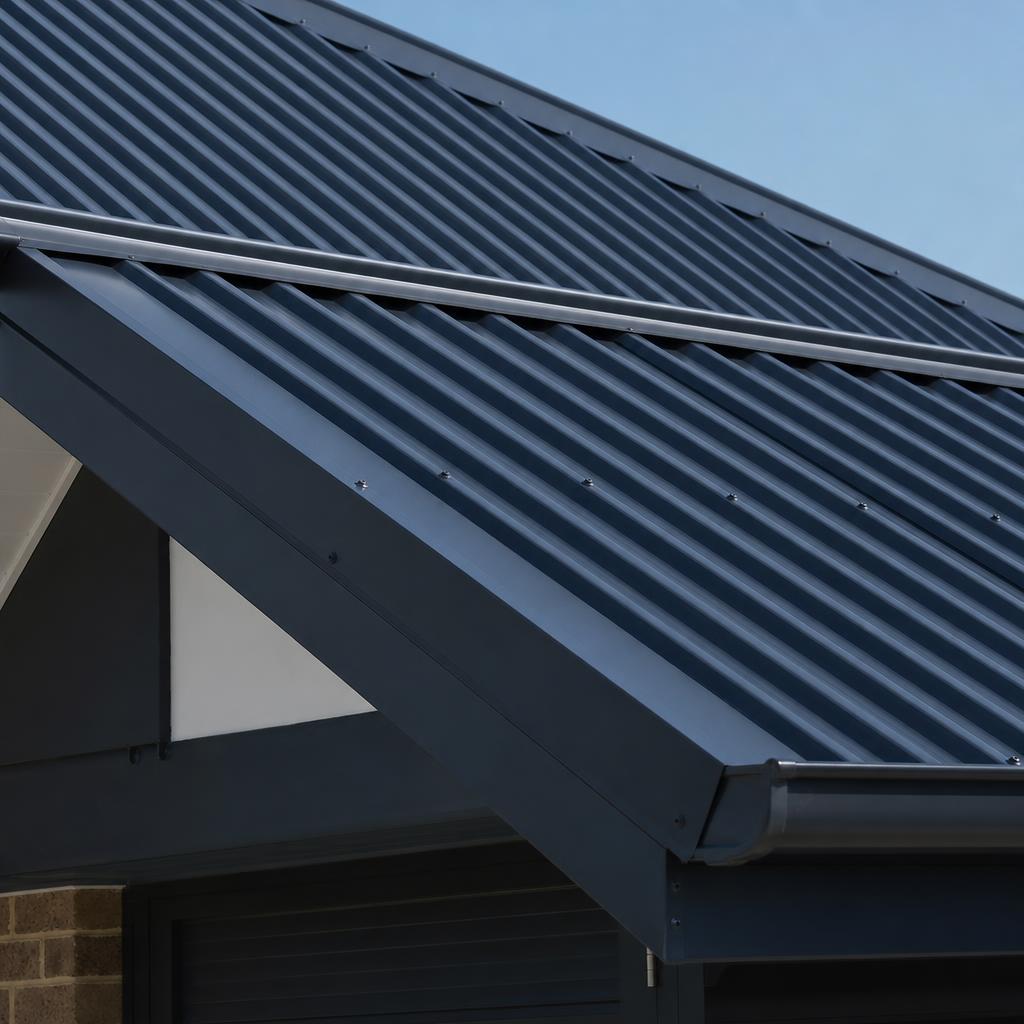
Replacing only a failed roof section can be sensible when the rest remains serviceable. A rear extension may have different materials or exposure from the original house, for example. But the decision depends on more than the size of the damaged patch: the retained roof and the junction between old and new need to work together.
Look for a meaningful boundary
A complete roof plane or a clearly separated extension may provide a more practical boundary than an arbitrary rectangle around a leak. Valleys, ridges, wall junctions and underlay determine where work can stop without creating an awkward transition. The smallest measured area is not always the simplest or most reliable scope.
Ask the roofer to mark the proposed boundary on photographs. It should be clear which tiles or sheets, flashings, cappings and drainage components will be renewed and which remain. An estimate described only as replacing the back half leaves too much uncertainty about shared details.
Assess the roof that will stay
A partial replacement has less value if adjacent sheets are broadly corroded, tiles are deteriorating across several slopes or the framing needs substantial attention. Conversely, one poorly built addition should not automatically condemn a sound original roof. The assessment should describe the condition of both areas, with inaccessible parts identified.
The partial roof replacement service focuses on whether contained replacement is worthwhile and how the renewed section can join the existing roof.
Matching is functional before it is visual
Tiles need compatible profiles and dimensions, not simply a similar colour. Metal profiles, lap geometry and material compatibility also matter. New material may weather differently from the retained roof, and discontinued finishes may not match closely. Ask to see the likely result before ordering rather than assuming a perfect colour blend.
- Check the availability and suitability of matching tiles or sheet profiles.
- Confirm how new underlay will connect to any retained layer.
- Identify flashings and valleys that cross the replacement boundary.
- Ask how the gutter and outlets below the renewed section will be checked.
Compare the whole project, not just the roof area
Access equipment, temporary protection, waste removal and setup can be significant parts of either scope. A partial job followed soon by another replacement can repeat those costs. Compare a contained repair, partial renewal and broader replacement against the observed condition, without relying on a promised remaining lifespan that cannot be established.
For strata or heritage properties, confirm the approval process before changing materials or appearance. If suspected asbestos or structural damage is found, work may need a separate assessment and revised sequence. Do not lift old sheets or collect samples yourself.
Define the handover
Keep a record of the replacement boundary, products used, completed junctions and any limitations concerning retained roofing. Clarify what is covered by the workmanship terms and which existing faults remain outside the job. A partial replacement should solve an identified problem without implying the untouched roof has been renewed too.
Choose a scope that suits the whole roof
Ask for an assessment of the failed area and the retained sections before deciding how far replacement should extend.
Discuss a partial roof replacement