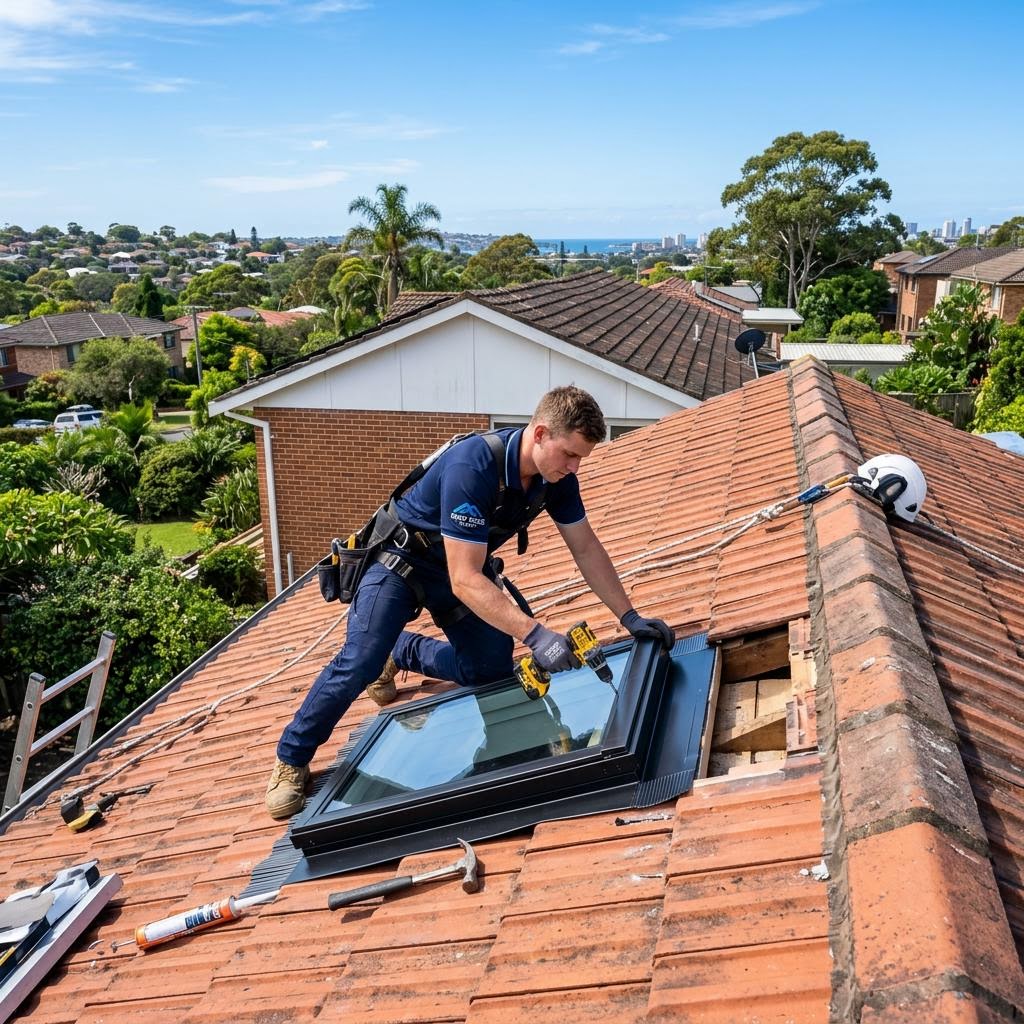
A wet skylight shaft can have several causes, and sealing around the outside is not a diagnosis. Rain can enter around roof flashings or the unit's glazing seals, while indoor moisture can condense on cold glass or a diffuser. The most useful first step is to record the pattern without dismantling anything.
Cold-morning droplets and rain-linked staining
Fine droplets on the room side of glass after a cold night or a hot shower suggest condensation. A run of water during rain, staining at one corner or dampness beside the frame suggests weather entry. Neither pattern is conclusive: condensation can collect at a corner, and a rain leak can take time to reach the lining.
Both problems can occur together. Keep notes over dry and wet days, including bathroom use and whether the room's extraction is operating. Photographs of the first visible moisture are more helpful than a photograph after the whole shaft is wet. Stay at floor level and keep clear of wet electrical fittings.
The type of skylight changes the inspection
A roof window has glazing, a frame and a flashing assembly integrated with the roof. An older dome may develop crazing or cracks, while a tubular skylight has a roof dome, tube connections and an internal diffuser. A damp diffuser does not by itself establish whether water came from the roof or condensed within the assembly.
Professional skylight leak diagnosis and repairs distinguish these components before deciding whether the job is a flashing repair, replacement seal or moisture-management improvement.
What to ask before accepting a repair
- Has the surrounding roof been checked, not just the skylight frame?
- Is the suspected fault in a flashing, a gasket, a dome or the shaft?
- Can the unit and suitable replacement components be identified?
- What evidence supports condensation, and could rain entry also be present?
A flashing kit needs to suit the unit, roof material and pitch. Seal replacement should use the correct component rather than an improvised bead that blocks drainage openings. Where a dome is brittle, patching a single crack may leave the rest vulnerable. Ask why a component can be retained or needs replacing.
Condensation needs a different scope
Where indoor moisture is responsible, the assessment may consider extraction, shaft insulation, glazing and ventilation. Adding sealant to roof flashings will not remove humidity. Electrical extraction or powered skylight work belongs with appropriately qualified trades, and insulation changes need to preserve required clearances and ventilation paths.
Do not drill drainage holes, tape over designed openings or climb onto a skylight. These units are not safe walking surfaces. If older surrounding materials could contain asbestos, leave them undisturbed and arrange appropriate assessment before opening up the roof.
Record what was repaired and what to watch
Keep the unit details, photographs and repair scope. After work, observe the skylight through comparable rain and a cold dry morning rather than treating one dry day as a complete test. If the rain leak stops but droplets remain, report that distinction: it can show that one problem was resolved while a separate condensation issue still needs attention.
Repair the right skylight fault
Describe when and where moisture starts so the inspection can separate weather entry from condensation.
Arrange skylight leak repairs