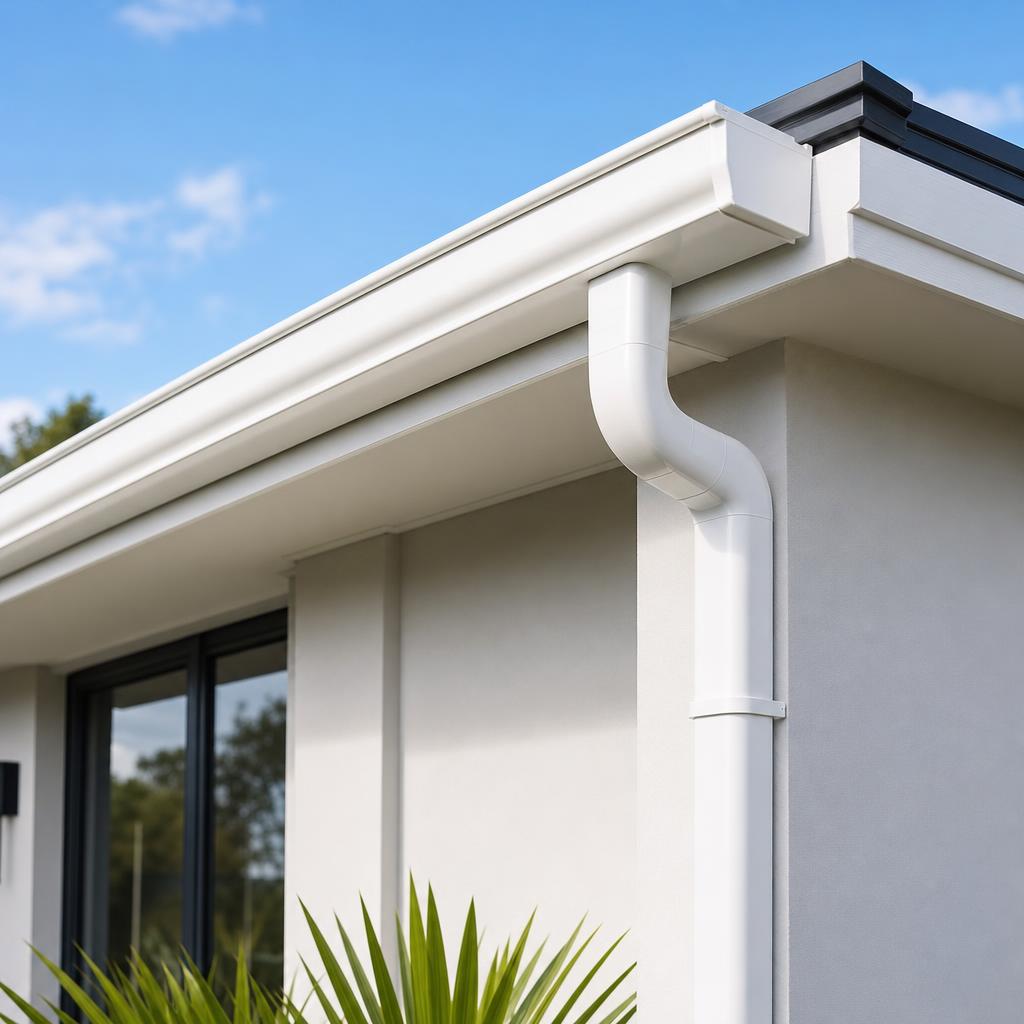
A new downpipe can look complete while still feeding a blocked underground line or serving too much roof area. Replacement is the opportunity to check the whole route from gutter outlet to discharge. The visible pipe is one component, and a like-for-like size is not automatically suitable just because it matches the old one.
Establish why the old pipe failed
Corrosion near the base, crushed sections, split joints and loose brackets all suggest different repair needs. Water leaking at the gutter outlet may come from the fitting rather than a failed pipe. Ask whether a local repair is sufficient before assuming the entire downpipe must be replaced.
If the gutter regularly backs up in heavy rain, inspect for restrictions and capacity issues as well as visible damage. Enlarging the downpipe alone may not help if the outlet above is undersized or the connection below cannot drain. A record of where water first appears helps the assessment.
The downpipe replacement service checks sizing and connection options alongside the condition of the pipe itself.
Size and quantity follow the catchment
The contributing roof area, gutter arrangement and local rainfall requirements determine the drainage design. A long run with one outlet may need a different arrangement rather than merely a larger pipe at the same corner. The contractor should explain how the proposal serves the actual roof, including any extensions added since installation.
Round and rectangular shapes can both work when correctly specified. Appearance, wall clearance and routing matter, but should follow the hydraulic and connection requirements. Avoid selecting a pipe solely because its colour or shape matches the neighbour's roof.
Trace the connection below
- Identify whether there is an existing serviceable stormwater connection.
- Check whether visible backup suggests a downstream restriction.
- Clarify any rainwater tank, spreader or other designed connection.
- State whether underground drainage work is included or separately quoted.
- Confirm the proposed discharge is appropriate and lawful for the property.
A new pipe discharging beside footings can leave erosion and dampness unresolved. Equally, connecting into an unverified underground opening is not proof that water leaves the property safely. Missing or failed drainage may require a separate qualified drainage or plumbing assessment. Do not divert water to a sewer, adjoining property or improvised outlet.
Include support and access in the quote
The scope should cover removal, suitable brackets and fixings, outlet fittings, offsets and access equipment. Supporting masonry, cladding or fascia may need repair before new brackets are installed. Agree who will make good disturbed surfaces and how any concealed services will be avoided.
Where old pipes or surrounding building materials may contain asbestos, do not cut, drill or remove them yourself. Arrange appropriate identification and handling. Work at height and stormwater connections also need suitable skills and safe access.
Check more than the appearance at handover
Request a controlled flow check, photographs of connections and a record of any downstream limitation. Such a check confirms basic function, not performance in every storm. Keep the scope and monitor the next rainfall from a safe location so any remaining gutter overflow can be investigated as part of the wider system.
Replace the pipe and resolve the water path
Ask for a scope that explains the outlet, pipe capacity and discharge connection rather than only the new colour.
Arrange a downpipe replacement assessment