Roof Repairs
Roof Sarking Repairs & Replacement
Sarking is the hidden foil layer that catches what gets past your tiles — when it fails, so does your ceiling.
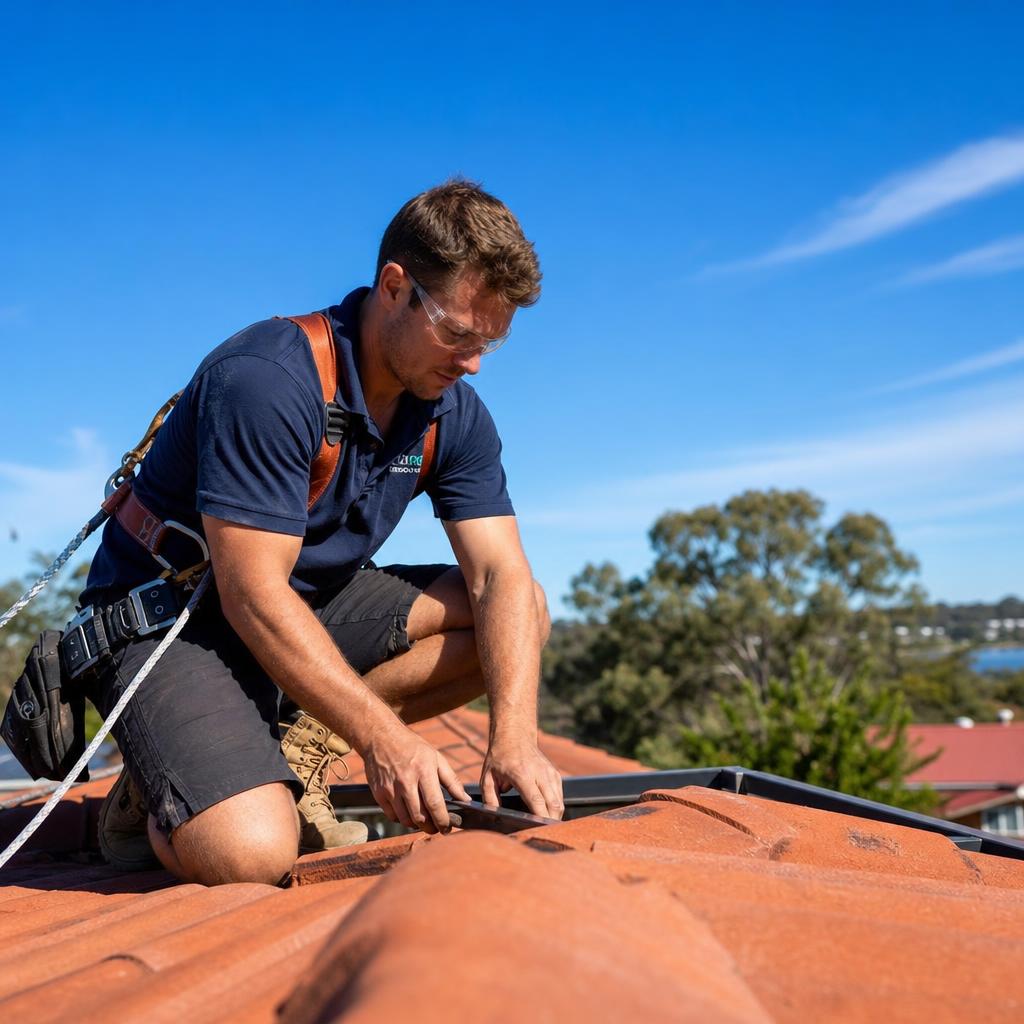
Sarking is the reflective foil membrane laid under the tiles or sheets and over the rafters. It is your roof's secondary barrier: it catches wind-driven rain and dust that sneaks past the covering, manages condensation, and reflects summer heat away from the ceiling. Many older Sydney homes were built with no sarking at all, and where it exists it can tear, sag or perish with age — leaving the ceiling exposed the next time a storm drives rain sideways under the tiles.
What sarking does and why it matters
During a driving Sydney storm, rain doesn't just fall — it's pushed uphill under the laps of tiles and sheets. Sound tiles alone won't stop this. Sarking catches that intruding water and drains it down to the gutter, keeping it off the ceiling and framing. It also blocks dust and embers, which matters in bushfire-prone fringes, and it provides a reflective break that lowers roof-space heat in summer.
The other job sarking does is manage condensation. Warm, moist air from inside the home rises into the roof space and can condense on the cold underside of metal roofing. Modern vapour-permeable sarking lets the roof breathe while still shedding liquid water, which stops the timber and insulation getting damp from the inside.
When sarking can be repaired versus replaced
Localised damage — a tear near a penetration, a section sagging between rafters, or foil that has pulled away from a batten — can often be patched with matching membrane and proper taping while the surrounding sarking stays in place. This is the practical fix when the rest of the layer is still sound.
If the sarking is widely perished, brittle, or simply absent, patching is a waste of money. In that case sarking is retrofitted properly during a re-roof or when the tiles are being lifted for other work, because it has to go over the rafters and under the battens to drain correctly. We'll tell you honestly which situation you're in rather than selling a patch that won't hold.
Retrofitting sarking to an older roof
Retrofitting means removing the roof covering, laying the membrane in courses from the eave upwards with correct laps so water always runs onto the layer below, and dressing it into gutters and around penetrations. It is genuinely worthwhile when we're already replacing tiles, re-bedding or re-battening, because the roof is open anyway.
We use the sarking grade suited to your roof — reflective foil for heat, or a vapour-permeable membrane where condensation control matters, such as under metal roofing on a well-sealed home. Getting the lap direction and gutter dressing right is what makes the difference between sarking that drains and sarking that traps water.
What's Included
- Inspection of existing sarking for tears, sagging and perishing
- Patch repairs with matching membrane and correct taping
- Removal of tiles or sheets where full replacement is needed
- Retrofit of reflective or vapour-permeable sarking over rafters
- Correct course laps and dressing into gutters and penetrations
- Honest advice on repair versus full replacement
Frequently Asked Questions
My house has no sarking at all — is that a problem?
Plenty of older Sydney homes were built without it, and they don't always leak. But you have no second line of defence against driving rain, and you miss the heat and condensation benefits. Retrofitting is most cost-effective when the roof is already being opened up for tiles or battens.
Can sarking be added without removing the roof?
No — it has to sit over the rafters and under the battens so water drains correctly onto the layer below. That means lifting the covering. If someone offers to add sarking from inside the ceiling, it won't drain properly and won't do its job.
Will new sarking make my house cooler?
Reflective foil sarking does reduce radiant heat entering the roof space, which helps in summer. It's not a substitute for ceiling insulation, but the two work well together. On a hot Sydney roof the difference in roof-cavity temperature can be noticeable.
What's the difference between foil and breathable sarking?
Reflective foil focuses on heat and works well under tiles. Vapour-permeable sarking lets internal moisture escape while still shedding rain, which suits metal roofs where condensation forms on the cold underside. We pick the grade based on your roof type and how tightly sealed the home is.
Request a Free Inspection
Book a free, no-obligation inspection with our local crew.
Ready To Protect Your Home?
Book Your Free Roof Inspection Today.
Whether you need emergency roofing, leak detection, storm damage repairs or simply peace of mind, our experienced roofing specialists are ready to help. No pressure. No hidden costs. Just honest roofing advice.